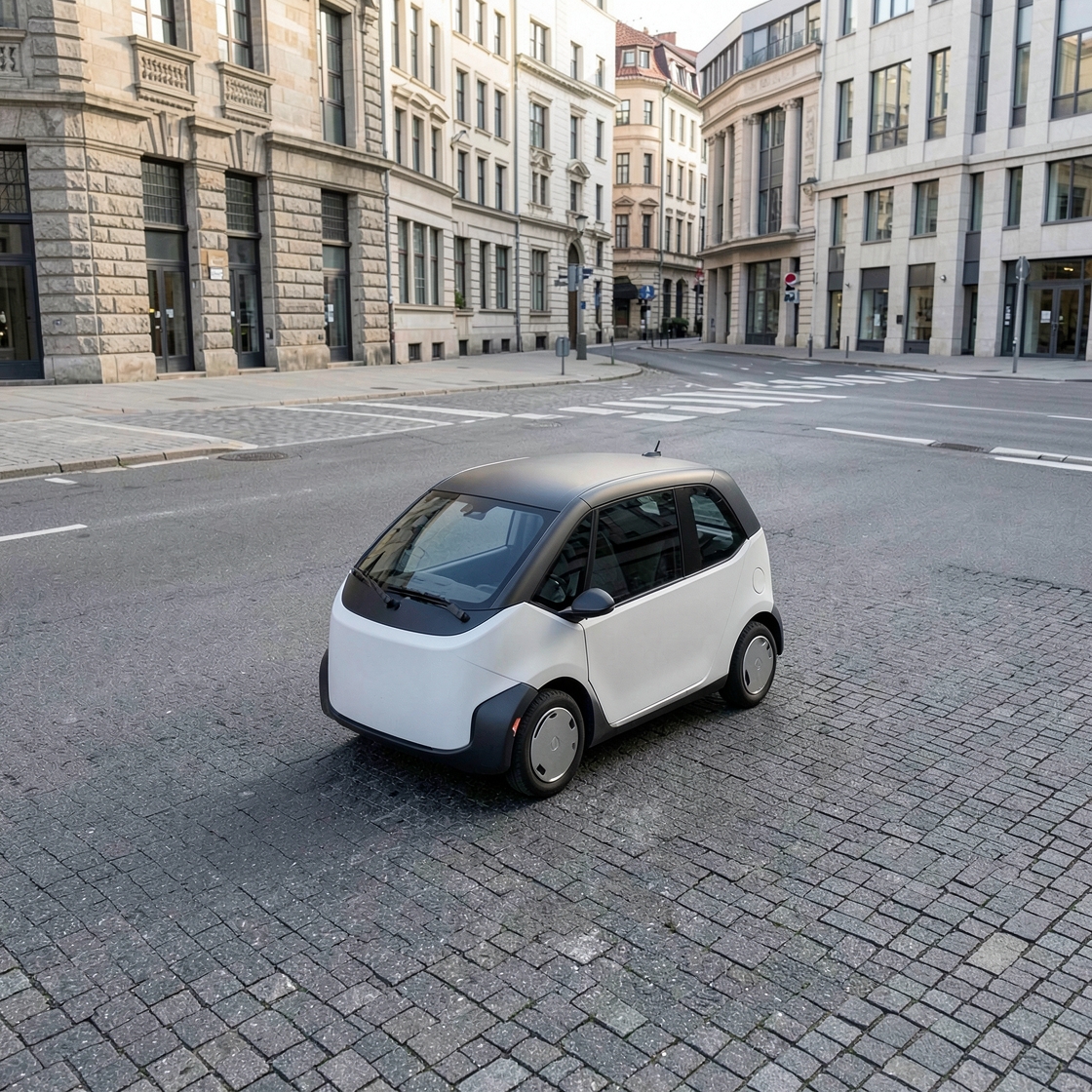
The Next Web reported on August 19, 2026 that Uber had started offering autonomous rides in Zagreb, Croatia. The launch makes Zagreb the first European city where riders can access this type of vehicle through the Uber app. It does not, however, mean that the cars are operating without human supervision.
A joint announcement from Pony.ai, Verne and Uber dated August 20 says a licensed operator remains behind the wheel during the initial phase. That distinction matters: this is a commercial, supervised autonomous service delivered through a mainstream ride-hailing app, not a fully driverless rollout.
What riders can book
The service is available in key parts of Zagreb, including the city centre, between 07:00 and 21:00. Riders request an UberX or Comfort trip as usual. If an autonomous vehicle is available, the app shows the vehicle details and instructions for starting and completing the ride. Availability and geographic coverage are expected to expand gradually, although the companies have not named the next areas or provided a timetable for removing the onboard operator.
The vehicle combines three separate layers. Pony.ai supplies its seventh-generation autonomous-driving system. Croatian company Verne owns and operates the fleet and handles the local service. Uber provides booking, payment, customer support and access to its existing rider network. This division of roles is central to the partners' strategy: the autonomous-driving developer does not need to build an entire consumer marketplace or local fleet operation from scratch.
The service predates its Uber integration
The August launch is best understood as a distribution milestone. Verne had already opened the Zagreb robotaxi service through its own app on April 8, using electric vehicles equipped with Pony.ai technology and trained operators onboard. Pony.ai's April announcement said the initial operating area covered roughly 90 square kilometres across the wider city-centre area, including Zagreb Airport.
What changed in August is access through Uber. That can reduce adoption friction because riders do not need to discover and install a dedicated robotaxi app. It also gives the partners a way to test how autonomous vehicles fit into an existing marketplace alongside human-driven cars. The companies say Uber users may be matched with an autonomous vehicle when requesting an eligible ride, rather than selecting an entirely separate transport network.
Supervised autonomy is the important qualifier
The partners describe Pony.ai's technology as Level 4 autonomous driving, but the current Zagreb service still places a licensed operator in the driver's seat. Level 4 describes a system designed to perform the driving task without human intervention within a defined operational domain; it does not by itself prove that every commercial deployment will run without an onboard supervisor. Local approval, service boundaries and the operator's staged launch still determine what riders experience.
For that reason, the strongest evidence of progress is not an empty driver's seat. It is the movement from a specialist app into Uber's booking flow while paid service continues under supervision. The next meaningful milestones will be evidence about wider coverage, service reliability and regulatory permission for fully driverless operation. None of those outcomes should be assumed from the launch announcement alone.
A template the partners want to scale
On August 13, Uber and Pony.ai announced plans to collaborate on more than 2,000 robotaxis across Europe, extending the model from Zagreb to four additional European cities. That figure is a deployment plan, not the size of today's Zagreb fleet, and the companies said further rollout details would be announced in phases.
The structure is commercially significant because it separates autonomous-driving technology, fleet ownership and consumer distribution. If the Zagreb model is repeated, local operators could manage vehicles and regulatory execution while Pony.ai supplies the driving stack and Uber supplies demand. Whether that arrangement scales will depend on operational and regulatory results that have not yet been published.
For riders, the immediate change is narrower and concrete: an ordinary Uber request in parts of Zagreb can now produce a supervised autonomous ride. For the industry, the launch is a test of whether robotaxis can move beyond isolated pilots and dedicated apps without obscuring the limits of the service that is actually on the road.
Related Articles
VitVio's Vetro rollout in Gdańsk puts operating-room timelines first
The selected-room deployment targets surgical-stage logging and coordination. Its value depends on measured workflow results and clear handling of captured data.
Gemini 4 Argon opens wider, with different access rules for each product
The October 13 rollout brings Argon to paid API users and Gemini subscribers, but app access and coding access have different requirements.
OpenAI's Dublin Applied AI Lab will build with customers
The 200-job plan spans customer engineering, privacy, sales and operations. Its lab and Irish founder-training programme offer different forms of support.
Microsoft Maia 300 sets a 2027 date for inference at rack scale
Maia 200 is already in production. Maia 300's next-year rollout and rack-level claims call for a separate assessment of service access and workload performance.