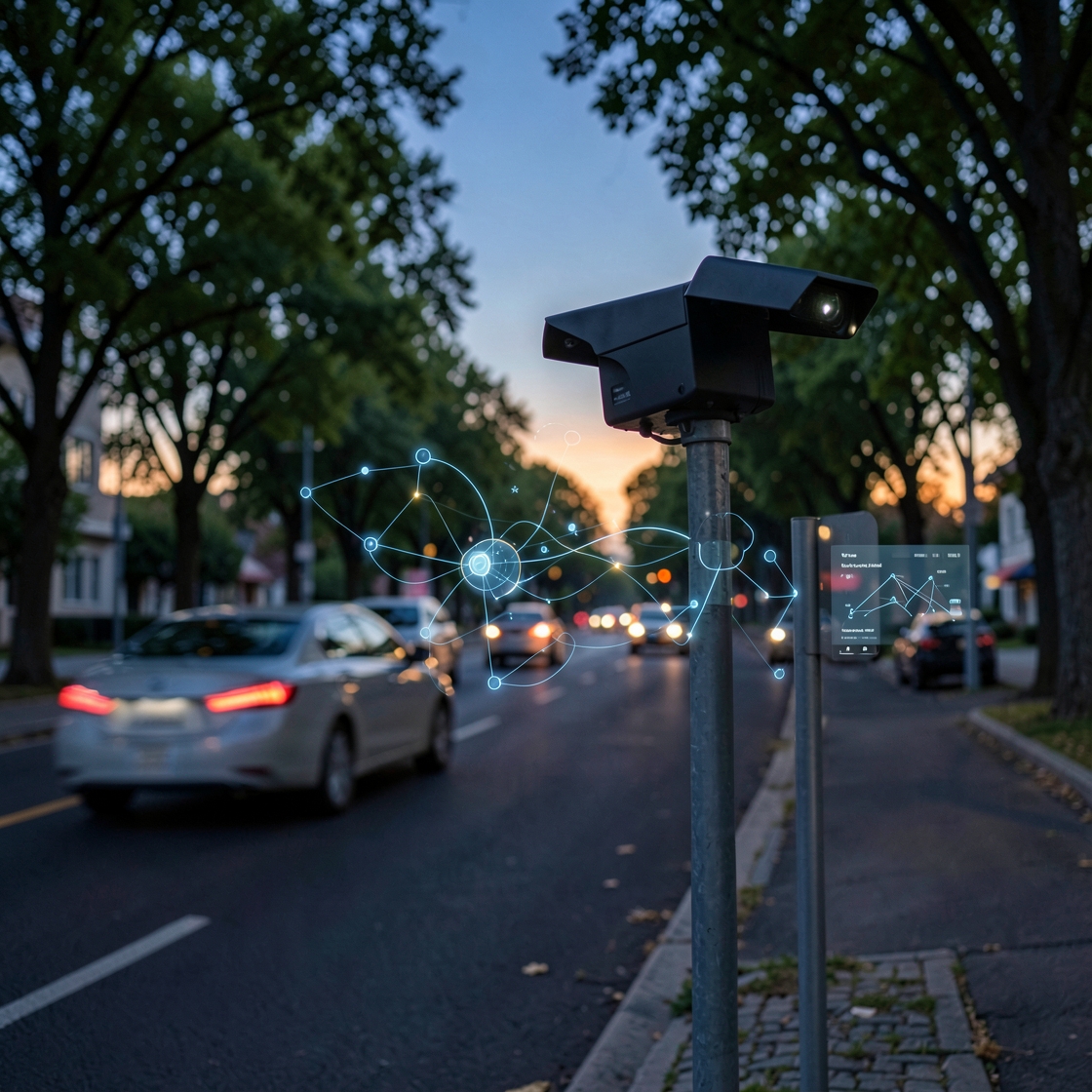
Flock cameras turn passing cars into searchable records
Business Insider reported on August 3, 2026, that Flock Safety's automated license plate readers are now common enough in the United States that many drivers may pass them without noticing. The cameras are installed along roads, at intersections, near neighborhood entrances, and around private properties. When a vehicle passes, the system captures an image and uses machine learning to convert the plate number and visible vehicle attributes into searchable data.
The practical appeal is clear for police departments and other customers. A plate can be compared against a hotlist, and investigators can search for a vehicle across a wider network than one local camera. Business Insider says Flock has deployed about 120,000 cameras across 49 states, while Flock's own product materials describe license plate readers as tools for real-time alerts and vehicle search.
The same network effect is what makes the technology controversial. An ALPR does not only record vehicles tied to an investigation. It records ordinary traffic in the camera's field of view, then stores those observations with time and location context.
What Flock says about safeguards
Flock says its LPR system is focused on vehicles, not facial recognition. In its LPR policy, the company says records are transferred to AWS Government Cloud and hard deleted on a rolling 30-day basis by default, unless a customer's law or policy requires a different schedule. Flock also says users should confirm computer-read plate translations before acting on an alert or search.
Those safeguards matter because ALPR output is probabilistic. A camera read can be incomplete or wrong, and a matching alert can still require human verification before a stop, detention, or investigation step. Business Insider pointed to cases in which misreads or insufficient verification led to serious consequences for innocent drivers, including a Roseville, California, dataset in which many stolen-vehicle and felony alerts were later judged incorrect.
Flock also describes retention as configurable within legal or policy limits. That means the privacy impact is not determined by the camera hardware alone. Local contract terms, agency policy, audit rules, and data-sharing settings shape how intrusive the system becomes in practice.
Why privacy groups object
The Electronic Frontier Foundation explains that ALPR systems collect plate numbers, location, date, and time, and can be used for real-time hotlist alerts or historical searches. Over time, that can reveal travel routines and visits to sensitive locations. The ACLU argues that the problem is not limited to one vendor: the broader risk is that public and private camera networks can become searchable movement databases with limited transparency or oversight.
EFF has also warned about "mission creep," citing searches it says moved beyond narrow criminal investigations into uses such as residency checks, background checks, and noise complaints. That claim is an advocacy finding, not a court ruling, but it illustrates the governance question facing cities: once a location database exists, who decides which searches are legitimate?
What readers should watch next
The immediate technology story is not just that Flock cameras can read plates. It is that roadside computer vision is becoming a shared public-safety data layer. Supporters will point to stolen vehicles, missing-person alerts, and faster investigations. Critics will focus on mass collection, false matches, data sharing, immigration enforcement concerns, and the absence of warrant requirements in many places.
For residents and local officials, the practical checklist is concrete: retention period, sharing defaults, audit logs, public transparency portals, human verification rules, allowed search purposes, and whether elected officials approve any retention extension. Those details decide whether ALPRs remain a targeted investigative tool or become routine infrastructure for tracking everyday movement.
Related Articles
Evos puts human approval at the boundary of its industrial AI operators
The startup announced $9 million for operators that learn business tasks. Its staged-autonomy model makes permissions and escalation central to evaluation.
SAP's TechWolf deal brings inferred skills into the SuccessFactors roadmap
SAP has agreed to acquire TechWolf, with closing expected in Q4. Its skills-mapping approach could help workforce planning, but employee review and evidence of proficiency remain essential.
Safari 27's Trade Desk ad-blocking report moves to iOS 27.2 beta testing
The public WebKit thread records changes in an October 5 beta, but no completed test report. Publishers need to separate ad delivery from identity matching.
RemoveMacAI 1.0.1 clarifies which Mac cleanup actions delete immediately
The new native app goes beyond disabling Apple Intelligence. Its latest patch distinguishes immediate deletion and reports only measured model space.