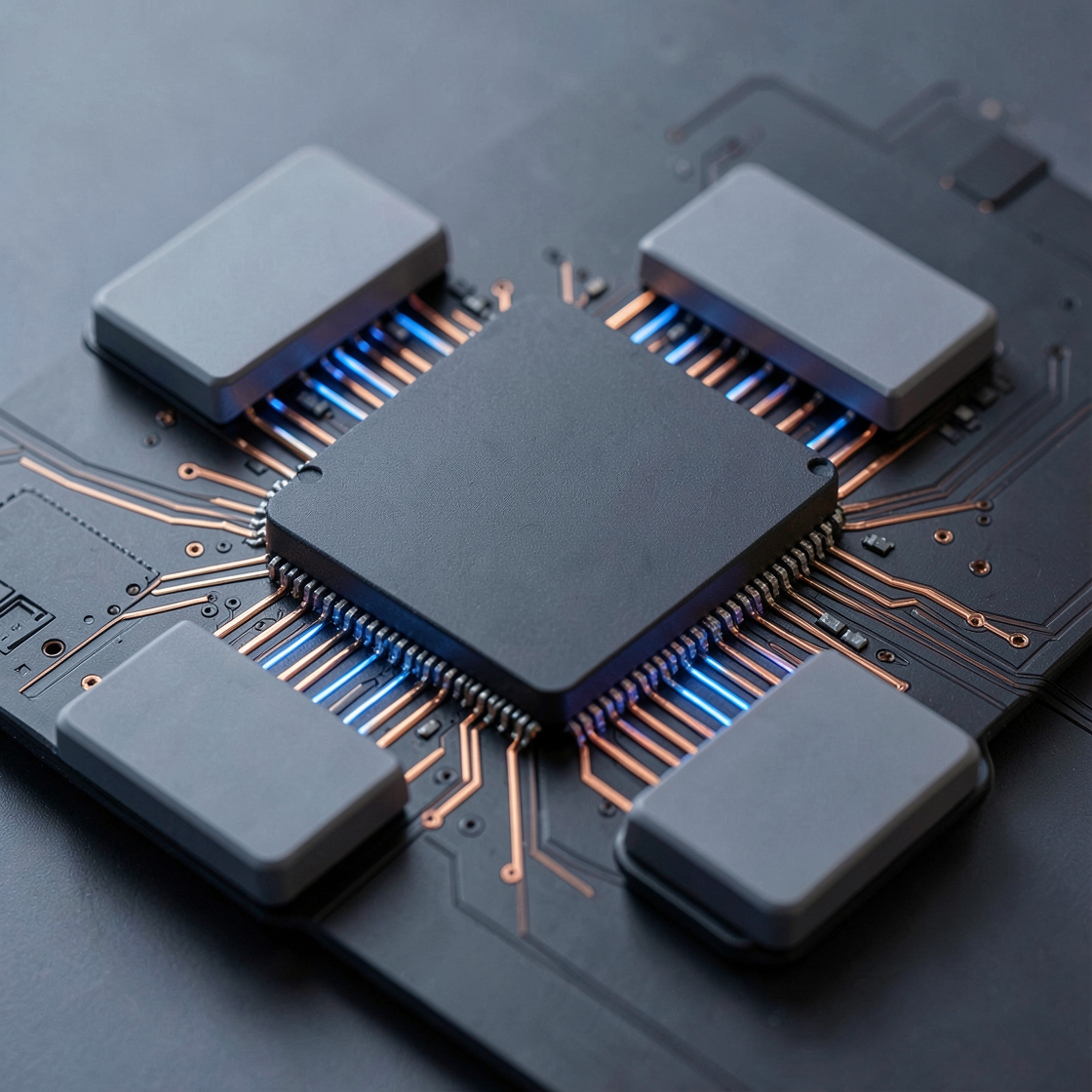
Qualcomm has revealed two headline features of the Oryon CPU planned for its next premium Snapdragon mobile platform: a peak clock speed of 5GHz and a new shared-cache design called FlexCache. Android Central reported the announcement on August 25, 2026, while Qualcomm's own technical overview supplies the architectural detail.
A milestone, not a complete benchmark
Qualcomm describes the processor as the first mobile CPU to reach 5GHz. The company says the result comes from its custom microarchitecture and implementation rather than a manufacturing process alone. It also emphasizes instructions per clock, or IPC, because frequency by itself does not show how much useful work a processor completes or how efficiently it does so.
That distinction matters. A 5GHz peak is a clear engineering milestone, but it does not establish sustained phone performance, battery life or thermal behavior. Qualcomm has not supplied independent benchmark results in the material reviewed here, and it has not yet named the final commercial platform or the phones that will use it. Those questions should remain open until hardware is tested.
What FlexCache changes
The more consequential architectural detail may be FlexCache. Qualcomm says heterogeneous Oryon cores can draw from a dynamically allocated shared cache pool instead of being restricted to fixed portions. Large working sets can remain closer to the CPU, reducing trips to slower system memory as work moves between cores.
Qualcomm connects that design to multitasking, gaming, video editing and multi-step AI workloads. The logic is credible: data that remains available across core hand-offs can reduce avoidable stalls. However, the size of the cache, its latency, power cost and behavior under sustained load will determine how much users actually gain. Those specifications were not included in the announcement.
Why phone makers will care
Premium Android phones now balance local AI, high-refresh gaming, camera processing and background services within a tight power envelope. A faster CPU can improve responsiveness, but device makers still decide cooling, memory, scheduler behavior and performance limits. Two phones built around the same platform may therefore behave differently.
FlexCache may also help when memory capacity is constrained, a point Qualcomm makes directly. It cannot replace system memory, but reducing unnecessary memory traffic can improve efficiency for some workloads. Developers should treat the design as a platform capability, not a guarantee that every application automatically becomes faster.
What to watch at Snapdragon Summit
Qualcomm says this disclosure comes ahead of Snapdragon Summit 2026 and plans to reveal more across the CPU, GPU and NPU. The important evidence will be the full platform name, cache configuration, device launches, sustained power measurements and independent tests. Until then, the confirmed news is narrow but meaningful: Oryon has crossed the 5GHz threshold on Qualcomm's next mobile platform, and FlexCache changes how its heterogeneous cores share nearby data.
Sources and methodology
Related Articles
USBSID-Pico connects vintage SID chips to USB, but the board revision matters
Hackaday's retrocomputing coverage highlights a bridge for real Commodore 64 sound chips. Voltage settings, controller choice and software support need a closer look.
Apple HomeView privacy depends on your paired device, too
A shared display's personal content requires face recognition and a recently unlocked paired device. Apple's Wi-Fi exception matters when setting household rules.
Harris HF-10 teardown shows how a clock tunes an analog filter
A newly identified 1985 chip links to the MF10 filter design. Its charge-transfer method explains clock-based tuning, while part identity alone cannot certify a replacement.
CMF Speaker S and M launch with USB-C audio and distinct stereo options
CMF's first speakers share wired audio and Auracast. Size, identical-model stereo pairing and conditional battery claims matter more than their removable panels.