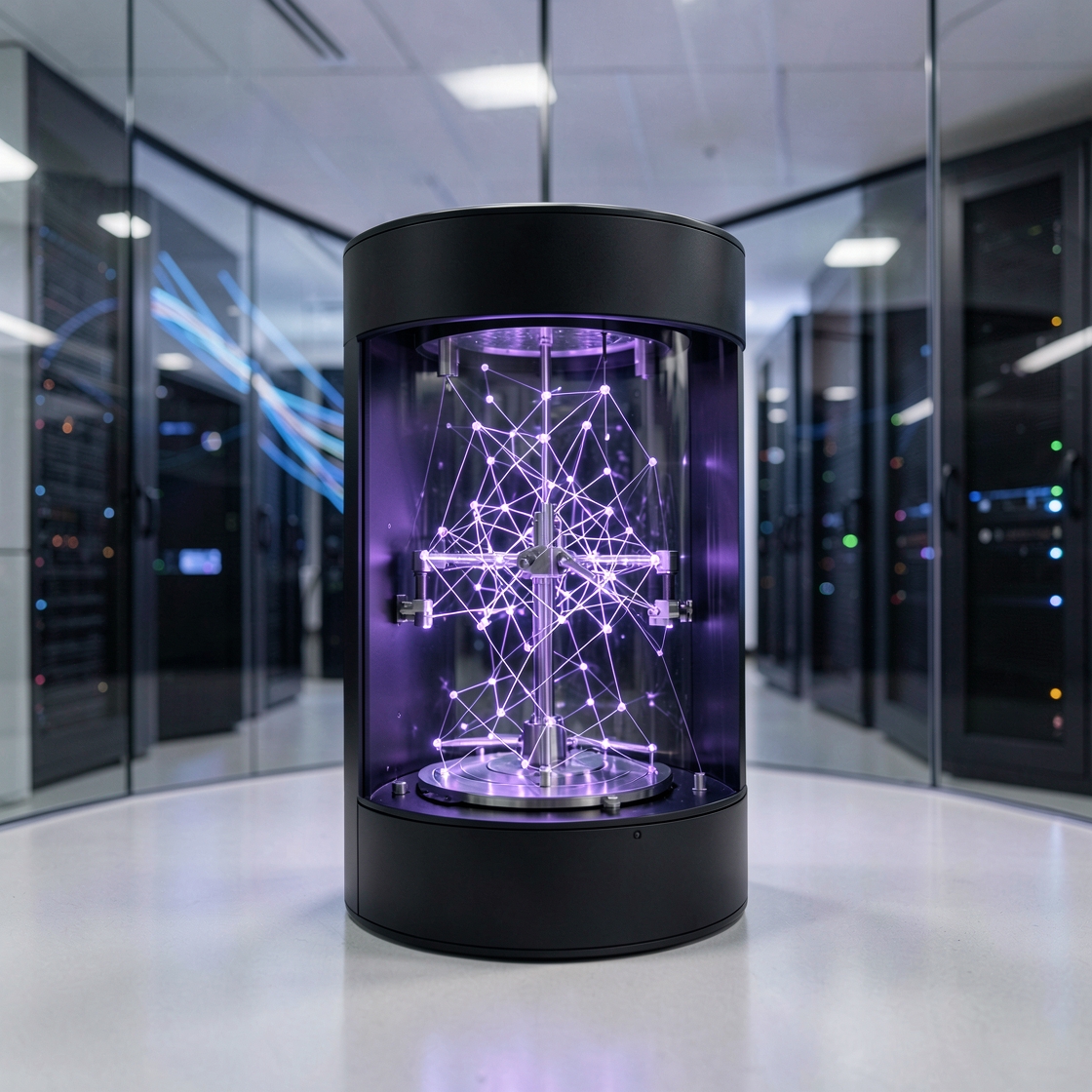
French quantum-computing company Pasqal has completed its business combination with Bleichroeder Acquisition Corp. II and entered Nasdaq under the symbols PSQL and PSQLW. The Next Web reported the debut on 28 August 2026. A Pasqal filing with the US Securities and Exchange Commission confirms that the transaction closed and that the ordinary shares and warrants were listed.
The listing is an important financing and disclosure milestone, but it is not proof that commercially useful quantum computing has reached maturity. Pasqal now has to explain its progress to public investors while continuing to solve difficult engineering, deployment and customer-adoption problems.
What closed and how much capital is involved
Bleichroeder shareholders approved the transaction on 25 August, and the combination was completed on 27 August. The company announcement carried by Nasdaq said ordinary shares were expected to begin trading on 28 August as PSQL, with warrants as PSQLW.
That announcement says approximately $360 million of cash was available at closing. Pasqal says it intends to use the capital to expand manufacturing and deployment of quantum processing units, advance research toward fault tolerance, broaden cloud and software access, integrate with classical high-performance computing and scale commercial operations. These are company plans, not guaranteed outcomes.
Earlier transaction materials described a $2 billion pre-money valuation and $200 million of committed convertible financing. The final public-company structure is documented across SEC filings, including the registration statement and closing report. Investors evaluating headline valuation multiples should use those filings and audited financial information rather than treating a first trading day as a measurement of technical success.
Why neutral atoms are a distinct approach
Pasqal builds quantum processors that use neutral atoms as qubits. In broad terms, lasers trap and arrange atoms, then controlled interactions are used to perform quantum operations. This differs from superconducting circuits and trapped ions in engineering requirements, control methods and scaling constraints.
The company says its platform supports analog quantum workloads today and is designed to evolve toward fault-tolerant computing. Its closing announcement describes seven quantum processing units deployed and three more in production, plus cloud access. Those figures come from Pasqal and should be read as company-reported deployment, not independent evidence that the systems outperform classical computing for a particular commercial task.
A useful way to assess the platform is to separate three layers. Hardware scale describes how many atoms can be prepared and controlled. Computational quality depends on fidelity, error behavior, connectivity and workload design. Business value requires a customer problem where the whole system, including software and integration, delivers a practical advantage. Progress in one layer does not automatically establish the others.
What public ownership changes
Public status creates regular disclosure obligations and a market price, giving outsiders more information than they would typically receive from a private startup. It also exposes the company to quarterly expectations and share-price volatility. That tension is especially sharp in quantum computing, where engineering roadmaps can span years and technical milestones do not translate immediately into recurring revenue.
The SEC registration statement is therefore as important as the launch announcement. It sets out transaction mechanics and risk disclosures. Pasqal's closing communication itself warns that commercialization, technical development, partner reliance and market acceptance remain uncertain.
For customers, the listing does not change how a quantum workload should be evaluated. Organizations still need a defined problem, a classical baseline, reproducible tests and a clear account of total operating cost. Cloud access can make experimentation easier, but access is not the same as demonstrated advantage.
What to watch next
The most informative signals will be audited results, cash use, system deliveries and customer evidence that distinguishes experiments from production workloads. Technical claims should be matched to published methods and comparable baselines. Progress toward fault tolerance should be assessed through error correction and logical-qubit evidence, not only physical-qubit counts or roadmap targets.
Pasqal's Nasdaq entry gives neutral-atom computing more visibility and a larger capital platform. It also replaces part of the private-company narrative with filings and market scrutiny. The technology story will be stronger if that scrutiny produces clearer evidence about reliability, utilization and customer outcomes.