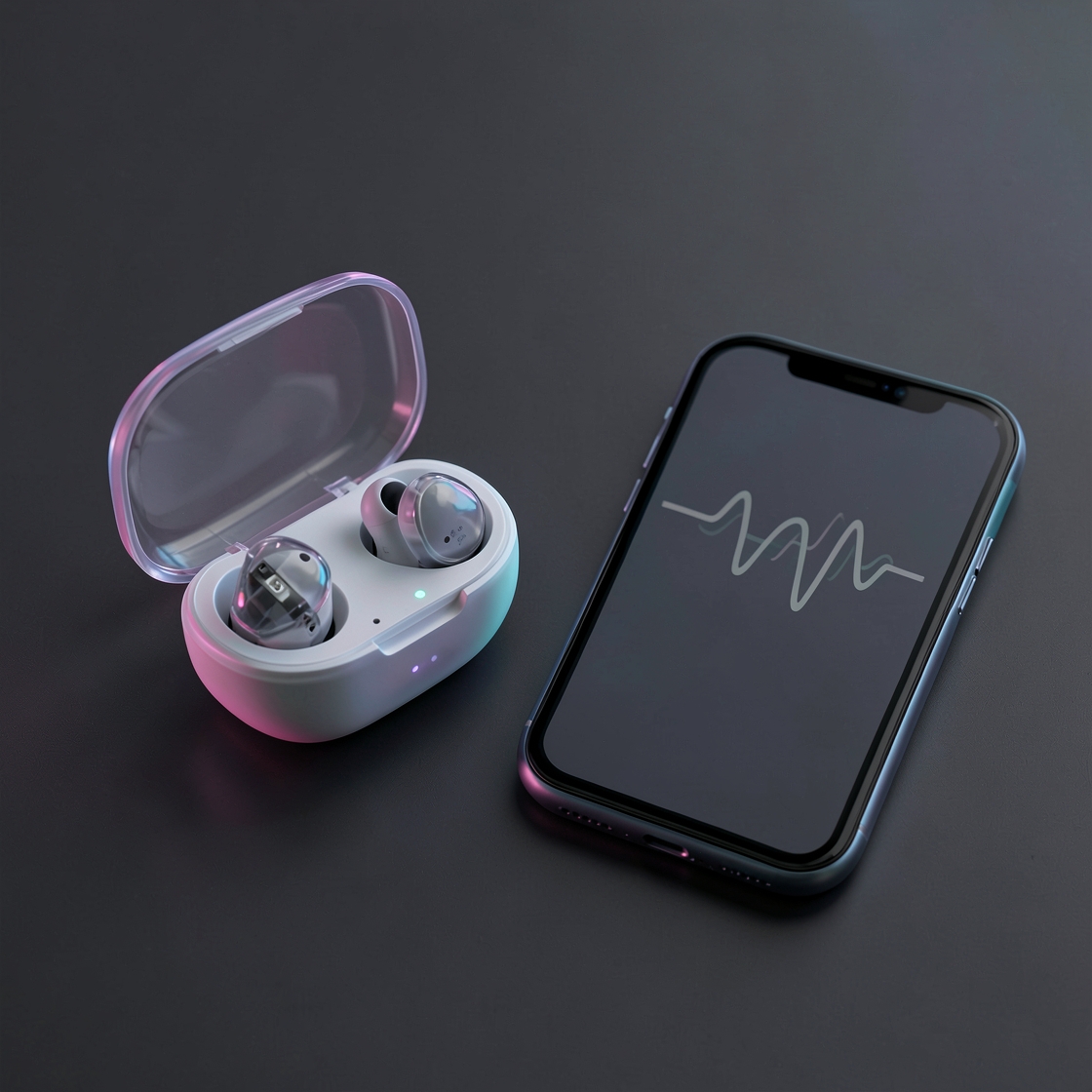
The Nothing Ear (3a) creates an unusual first task for a new owner: before deciding whether these earbuds sound good, decide whether you are willing to edit how they sound. Independent measurements and listening reports broadly agree that the default presentation is assertively bass-forward. That can be entertaining, but it can also crowd vocals and acoustic detail.
This is not a fatal flaw because Nothing supplies one of the most capable companion apps in this class. The tension between a polarizing default and unusually deep control is the point of this review. Ear (3a) is compelling for a listener who enjoys shaping a product; it is less obvious for someone who wants balanced sound immediately after pairing.
The other defining feature is Audio Snapshot, which can capture media or calls. It can be useful, but it makes consent, regional availability and account requirements part of the buying decision. The hardware is easy to like; the software asks for judgment.
This is a research-based review synthesized from published specifications and independent testing. TechKili did not physically test the product.
Ear (3a) asks you to tune before you judge
Nothing positions Ear (3a) below Ear (3), yet the cheaper branch no longer feels stripped down. You get Bluetooth 6.0, dual-device pairing, SBC, AAC and LDAC, adaptive ANC, an eight-band parametric equalizer, pinch controls and an IP54 rating. Four silicone tip sizes improve the odds of a proper seal. That list is important because it changes the question from “what is missing?” to “which compromises remain?”
The clearest compromise is tuning. RTINGS measured substantial rumble and thump while finding the midrange and treble comparatively well balanced. Expert Reviews was harsher, describing the stock balance as muddy for some material but effective for bass-led genres. WIRED found the result enjoyable and bass-rich. Those are different judgments of the same emphasis, not contradictory facts.
Treat the factory tuning as a starting preset. If you dislike adjusting EQ, audition before buying or choose a more neutral alternative; if you enjoy tuning, the advanced controls are a real advantage.
The useful hardware is hiding behind the bass
| Decision point | Verified evidence | Practical consequence |
|---|---|---|
| Sound hardware | 12 mm dynamic driver; SBC, AAC and LDAC | Android listeners can use LDAC, but codec support does not remove the need to tune the bass |
| Noise control | Adaptive ANC; official maximum-depth claim of 45 dB | Useful for commuting, provided the tips form a good seal |
| Endurance | Nothing claims up to 10 hours per bud and 42 with the case | Strong headline figures, but conditions and ANC use matter |
| Durability | IP54 rating | Suitable for sweat and light rain, not immersion |
| Fit and control | Four tip sizes and pressure-sensitive stems | Better chance of a seal and fewer accidental taps than touch panels |
| Charging | USB-C; no wireless case charging | Cable charging is the everyday tradeoff against Ear (3) and Space A40 |
The 12 mm driver is larger than Ear (a)'s, and Nothing's product page claims up to 5 dB more bass. That manufacturer claim explains the design intent, but it does not prove better fidelity. The useful feature is the equalizer: SoundGuys found the eight-band parametric system unusually powerful, including shareable presets. A buyer can control frequency, gain and bandwidth instead of choosing only a vague “more treble” button.
Build and interaction are safer bets. WIRED found the case solid and pocketable and the pinch controls dependable. SoundGuys liked the shallow nozzle and the way the contacts avoid rubbing the skin, though it also found that a bud could sit slightly askew in the case and fail to charge. The three-LED status strip is a small but legible improvement over a single ambiguous light.
ANC travels better than the microphones
ANC is the strongest broadly shared result. RTINGS found effective isolation from low bus-engine rumble through higher fan noise. Expert Reviews also regarded cancellation as a strength, even preferring it to Nothing's flagship in its tests. WIRED was more reserved, placing it below the best premium systems. Seal, test method and reference products can explain that range; the responsible conclusion is strong budget-class ANC, not class-leading silence.
Call quality is more conditional. RTINGS found speech intelligible against ordinary background chatter but thin and nasal in timbre. SoundGuys' feature analysis confirms a six-microphone system and modern Bluetooth stack, yet microphone count alone cannot promise natural voice reproduction. If long work calls are the priority, Nothing Ear (3) has the better case in RTINGS' comparison.
Gaming is another boundary. Bluetooth 6.0 sounds future-facing, but RTINGS still found latency too high for timing-sensitive play even with Low Lag mode. Mobile strategy games and video playback with compensation are plausible; rhythm games and competitive shooters deserve a low-latency dongle product instead.
Audio Snapshot is a responsibility, not a party trick
Audio Snapshot stores up to a minute of current media, or the preceding 30 seconds, in 32 MB aboard the earbuds. Call recording can run up to two hours. WIRED found the latter genuinely useful for important calls on the move, and the audio transfers into Nothing X for replay, sharing and transcription.
There are three limits. First, recording availability depends on the region. Second, advanced transcription requires a Nothing account; Nothing includes three months of Pro service with 120 minutes per month but has not published the later price on the cited product page. Third, legality and etiquette are not interchangeable. Nothing says an audible tone warns both parties, but local consent requirements still govern the conversation. Nothing's support guidance lists supported regions and documents feature behavior.
The warning tone is a safeguard, not blanket permission. Check local law, obtain consent where required and avoid recording sensitive conversations merely because the gesture is convenient.
Static Spatial Audio is easier to dismiss. WIRED judged it poor, and a fixed widening effect is not a reason to buy these earbuds. The standard stereo path, EQ and ANC carry the product.
The predecessor is simpler; the flagship is not automatically better
Ear (a) is the direct predecessor. RTINGS found Ear (3a) substantially better at blocking noise, slightly longer-lasting and much more adjustable. But it also found Ear (a)'s factory balance easier for listeners who do not want to edit an EQ. Existing Ear (a) owners therefore have a narrow upgrade case: move for ANC, controls and capture features, not merely because the number changed.
Ear (3) is the more expensive sibling, but “flagship” does not settle every priority. According to RTINGS, it produces voices more accurately and adds wireless case charging and iOS Quick Pair. Ear (3a) counters with longer continuous endurance, comparable ANC and similar sound tools. Expert Reviews even preferred the cheaper model's comfort, ANC and battery behavior in its use.
Anker's Soundcore Space A40 is the utilitarian outside choice. RTINGS credits it with stronger ANC, longer battery life, an auto-off timer and wireless charging. Ear (3a) responds with the better parametric-EQ proposition, more distinctive industrial design and recording tools. Neither is universally superior; the winner depends on which inconvenience you notice daily.
Choose by the friction you can tolerate
Choose Nothing Ear (3a) if you value strong isolation, expressive design and detailed EQ, and you are prepared to adjust the stock sound.
Keep or seek Nothing Ear (a) if a more balanced out-of-box presentation matters more than stronger ANC and Audio Snapshot.
Choose Nothing Ear (3) if natural call reproduction and wireless case charging justify the step up.
Choose Soundcore Space A40 if endurance, stronger measured isolation and wireless charging outrank recording and granular EQ.
Look for a dedicated low-latency system if competitive gaming is central.
For the right buyer, Ear (3a) is unusually complete rather than merely inexpensive. Its ANC, app and controls do serious work. The recommendation is conditional because the bass emphasis, wired-only case charging and recording privacy are not footnotes; they are the daily frictions that decide whether its versatility feels empowering or fussy.
Buying options and alternatives
Affiliate disclosure: As an Amazon Associate I earn from qualifying purchases. Links in this section may earn TechKili a commission without changing the purchase price.
Nothing Ear (3a) Noise Cancelling Earbuds: The exact Ear (3a) listing for readers who want Nothing's customizable sound, ANC and Audio Snapshot features.
Soundcore by Anker Space A40 Adaptive ANC Earbuds: A close alternative for buyers who prioritize stronger isolation, longer endurance and wireless case charging over Nothing's recording tools and parametric EQ.
WUNIAK Case for Nothing Ear (3a), Black: A silicone cover explicitly made for the Ear (3a) case, useful if the transparent charging case will travel loose in a bag.

Sources and limits of this research synthesis
TechKili synthesized the official Nothing product page, Nothing support guidance, and opened independent work from WIRED, RTINGS, SoundGuys, Expert Reviews and the RTINGS Space A40 comparison source. Official battery and ANC values remain manufacturer claims; independent judgments retain their source and test context. No physical test was performed by TechKili.