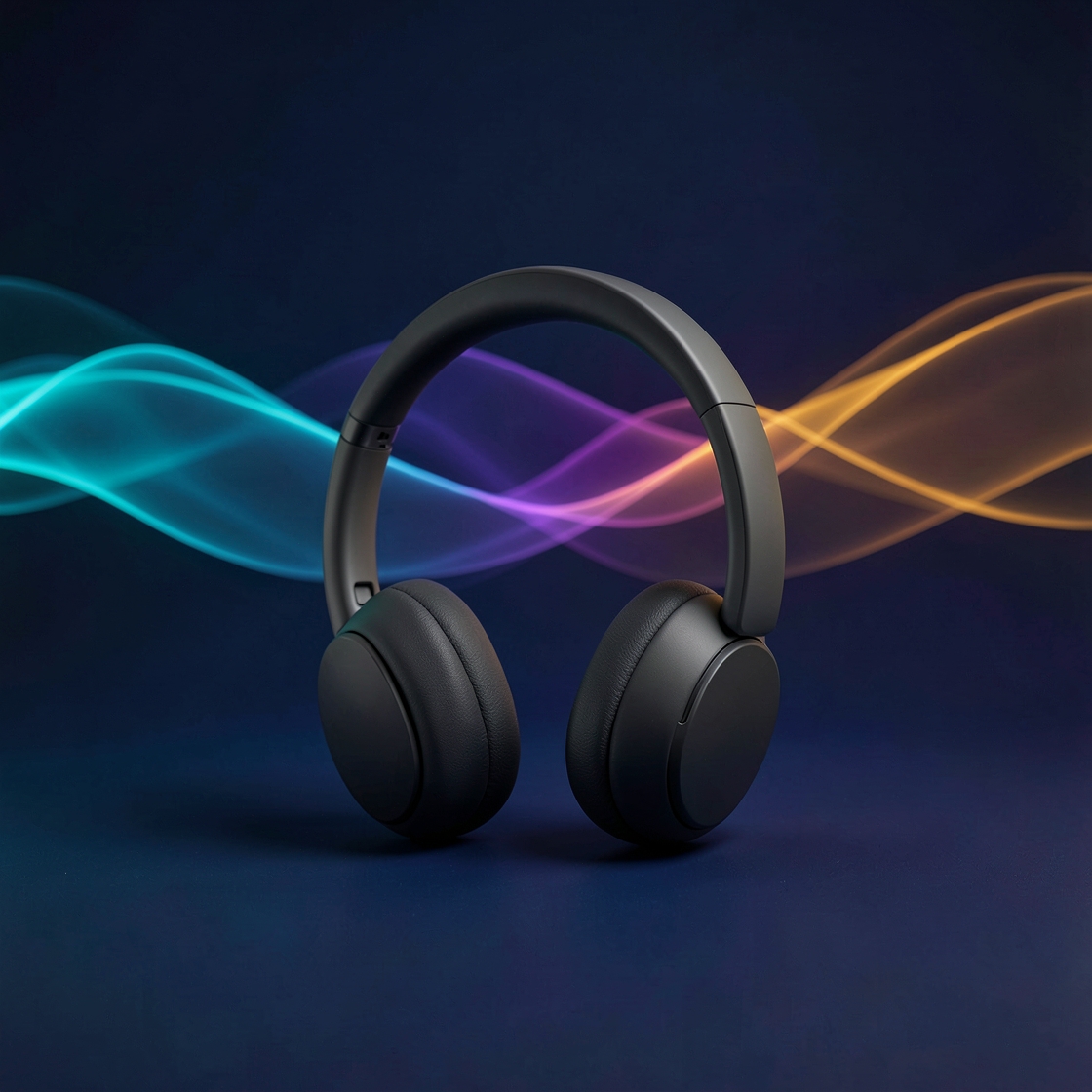
Noble Audio FoKus Artemis asks a strange question before the music starts: how much setup should a flagship wireless headphone require? Its three-driver architecture, per-ear hearing profile and ten-band EQ create an unusually high tuning ceiling. Independent reviewers broadly agree that the result can sound spacious, detailed and powerful. They do not agree that the best result arrives straight from the box.
That distinction defines the product. Artemis is not the easiest premium ANC headphone to recommend for a flight, a work call or a buyer who never opens companion apps. It is aimed at the listener who will run the hearing test, compare profiles and keep adjusting until the dynamic, planar and balanced-armature drivers work for their taste. In exchange, it offers USB audio, broad codec support, a replaceable battery and replaceable pads — features that give a luxury purchase a credible life beyond one sealed cell.
This research-based review synthesizes published specifications and independent tests. TechKili did not physically wear, measure or benchmark the headphones. Listening, comfort, ANC, call and battery observations remain attributed to the reviewers who produced them.
FoKus Artemis makes setup part of the sound
Noble's Audiodo system measures each ear and creates a personal profile stored on the headphones. That storage matters: once a profile or EQ is saved, it follows Artemis across phones, computers and wired USB sources without requiring the app to remain open. The official product page also lists spatial audio and a conventional ten-band EQ, so the hearing profile is a starting point rather than the only adjustment.
Tom's Guide found the personal profile transformative, adding treble clarity and space without sacrificing weight. Bloom Audio reached a more conditional conclusion. It preferred Apollo Pro and Focal Bathys at first listen, found Artemis somewhat congested in stock form, then judged the personalized result capable of the best technical performance of the three. Creative Bloq, by contrast, liked the stock presentation immediately for its vocal presence, discrete layers and taut drum attack.
That disagreement is not a flaw in the evidence. It is the buying instruction. Artemis has range, but its baseline may not suit every ear or every fit. The premium buys acoustic and software headroom, not certainty that Noble's default tuning will match your preferences.
Treat the hearing profile as part of setup, not proof that the headphone is automatically accurate. Compare it with stock tuning and a simple EQ before choosing what sounds natural to you.
Three drivers create headroom, not a guaranteed taste
Each earcup combines a dynamic driver, a planar driver and a balanced-armature driver. Noble describes the dynamic unit as the source of body and bass, the planar element as the fast, open midrange contributor, and the balanced armature as the precision and air layer. Those are design intentions, not independent measurements of where each crossover operates; Noble does not publish the crossover frequencies on the product page.
The independent listening reports overlap on the practical result. Tom's Guide praised vocal isolation, fine treble detail and clear separation in dense arrangements. Creative Bloq heard a wide, dry-leaning presentation where instruments remained easy to locate. Ecoustics reported powerful, articulate bass, deep extension and an organic stage, while also hearing occasional treble grain and tonal shifts with positioning.
Those findings support a strong sound-quality case without turning the driver count into a score. Three transducer types make engineering complexity possible; careful integration and the final profile determine whether that complexity becomes coherence. Buyers sensitive to forward treble should audition if possible or plan to use the EQ. Listeners who enjoy dissecting a mix have the clearest reason to accept that work.
The ownership hardware is more mature than the app
At 324 g, Artemis sits close to Bowers & Wilkins Px8 S2 and below the 350 g Focal Bathys. The aluminum construction, IP52 rating and magnetic pads make it more than a delicate indoor showpiece. Under the left pad is a screwed-in 600 mAh battery that the owner can replace. Noble rates playback at more than 55 hours without ANC and more than 35 hours with ANC, with charging under 1.5 hours.
Tom's Guide used the headphones heavily across a three-day trip and still reported roughly half a charge, although that was not a controlled rundown. The more important long-term fact is access. Pads are wear items and batteries age; making both replaceable removes two common reasons expensive wireless headphones become disposable. The unresolved question is supply: the advantage depends on Noble continuing to sell compatible batteries and pads when owners need them.
Connectivity is broad: Bluetooth 6.0, multipoint, LDAC, aptX Lossless, aptX Adaptive, AAC and SBC, plus USB-C audio and 3.5 mm playback through the included adapter cable. Tom's Guide liked the physical controls but had intermittent Google Meet multipoint recognition. Ecoustics also reported occasional Bluetooth disconnects.
The app is the sharper compromise because it controls the product's signature advantage. Tom's Guide encountered failed recognition, repeated firmware-update crashes and a duplicated personal profile after an update. Noble patched the iOS app during the review, and onboard profile storage reduces daily dependence, but a flagship whose best sound requires software should offer flagship-grade software reliability. The hardware is ready for years; the app still needs to prove that it can support them.
Aircraft silence is useful, not class-leading
Artemis includes variable ANC, transparency mode and wear detection. Tom's Guide found the ANC effective enough to work in a busy terminal and to suppress the steady noise of an Airbus A320. It was less successful with a nearby child than Px8 S2 had been in the reviewer's earlier flight, and the highest setting caused pressure discomfort for that listener. Ecoustics called it Noble's best ANC but still placed Sony and Bose ahead.
That is a respectable result for an audiophile-first design, not a category win. The distinction matters because premium wireless buyers often assume price buys every capability at once. Artemis prioritizes tuning range, wired flexibility and serviceability. A Sony WH-1000XM6 is the safer alternative when maximum travel isolation and mature call processing matter more.
Calls reveal the same hierarchy. Tom's Guide reported a clear but slightly thin voice, while the microphone picked up paper, keys and package noise around the caller. Apollo Pro's detachable boom microphone remains more purposeful for regular meetings or gaming. Artemis can handle an occasional call; it is not the obvious purchase for someone whose workday is built around them.
Apollo Pro, Px8 S2 and Bathys expose the trade
The predecessor and rivals do not make Artemis redundant; they show exactly what its premium pays for.
| Model | Verified design focus | Rated battery context | Practical priority |
|---|---|---|---|
| Noble FoKus Artemis | Dynamic + planar + balanced armature; personalized profile; replaceable battery and pads | 55+ hours ANC off; 35+ hours ANC on | Maximum tuning potential and serviceable ownership |
| Noble FoKus Apollo Pro | Dynamic + planar; detachable boom mic; smoother stock tuning in Ecoustics' comparison | Longer endurance than Artemis in the comparison | Work calls, gaming and easier first listen |
| Bowers & Wilkins Px8 S2 | 40 mm carbon dynamic drivers; leather and aluminum; five-band EQ | 30 hours | More polished luxury build, app and travel ANC |
| Focal Bathys | 40 mm aluminum-magnesium driver; USB-DAC mode | 30 hours Bluetooth ANC; 40 hours USB-DAC | Mature audiophile wireless experience with less setup |
Ecoustics found Artemis materially stronger than Apollo Pro in maximum sonic performance and materials, but Apollo Pro kept the practical advantages of a boom mic, longer battery and smoother stock tuning. Tom's Guide preferred Artemis for sound finesse over Px8 S2, yet considered the Bowers & Wilkins product more luxurious, more polished and better at suppressing a nearby voice. Bloom Audio put Bathys ahead at first listen, then Artemis ahead after personalization.
The comparison therefore changes with behavior. A buyer who never tunes should not pay for tuning potential. A frequent caller should not dismiss the boom mic. A traveler who values silence over replaceability should prioritize the strongest ANC. Artemis wins when the listener wants to shape the final sound and keep the hardware alive.
Buy the tuning ceiling only if you will use it
FoKus Artemis earns a recommendation with conditions. Its sound has unusually broad independent support, its source options cover both convenience and lossless wired listening, and its replaceable battery and pads make the ownership case unusually thoughtful. The condition is willingness to participate: run the hearing profile, compare it, save an EQ and tolerate an app that has not yet reached the hardware's level.
Choose by the friction you are willing to accept:
Choose FoKus Artemis if separation, personal tuning, USB audio and replaceable parts outrank turnkey polish.
Choose Apollo Pro if you want Noble's hybrid approach with a boom mic, longer endurance and a calmer first listen.
Choose Px8 S2 if materials, app refinement and stronger travel isolation matter more than user battery replacement.
Choose Focal Bathys if you want a mature USB-DAC audiophile headphone and prefer less tuning work.
Choose Sony WH-1000XM6 if flights, commuting and calls define the purchase more than sound-shaping or serviceability.
The best version of Artemis is not simply the one in the box. It is the one a patient owner has configured, verified and can maintain. That makes it more demanding than its mainstream rivals, but also more defensible as a long-term premium purchase — provided Noble keeps replacement parts available and turns the app into software worthy of the hardware.
Buying options and alternatives
Affiliate disclosure: As an Amazon Associate I earn from qualifying purchases. Links in this section may earn TechKili a commission without changing the purchase price.
Sony WH-1000XM6, Black: A travel-first alternative for buyers who prioritize mature noise cancellation and call handling over Artemis's replaceable parts and higher tuning ceiling.
Twelve South AirFly Pro, White: A compatible 3.5 mm Bluetooth transmitter for using Artemis wirelessly with in-flight entertainment when USB audio is not available.

Sources, disagreements and research limits
Product identity, the August shipping revision, specifications and personalization claims come from Noble Audio's current product page and its June FoKus Artemis announcement. Predecessor details come from Noble's FoKus Apollo Pro announcement. Equivalent rival specifications come from the official Bowers & Wilkins Px8 S2 and Focal Bathys pages.
Independent sound, app, travel, call and battery findings come from Tom's Guide, Creative Bloq, Ecoustics and Bloom Audio. Bloom Audio is also a retailer, so its listening comparison is treated as attributed evidence rather than an independent pricing authority. Test tracks, ears, firmware and fit differ; no source establishes universal sound preference, controlled battery life or class-leading ANC. Amazon did not expose a verifiable exact Artemis listing, so no exact-product ASIN was used.