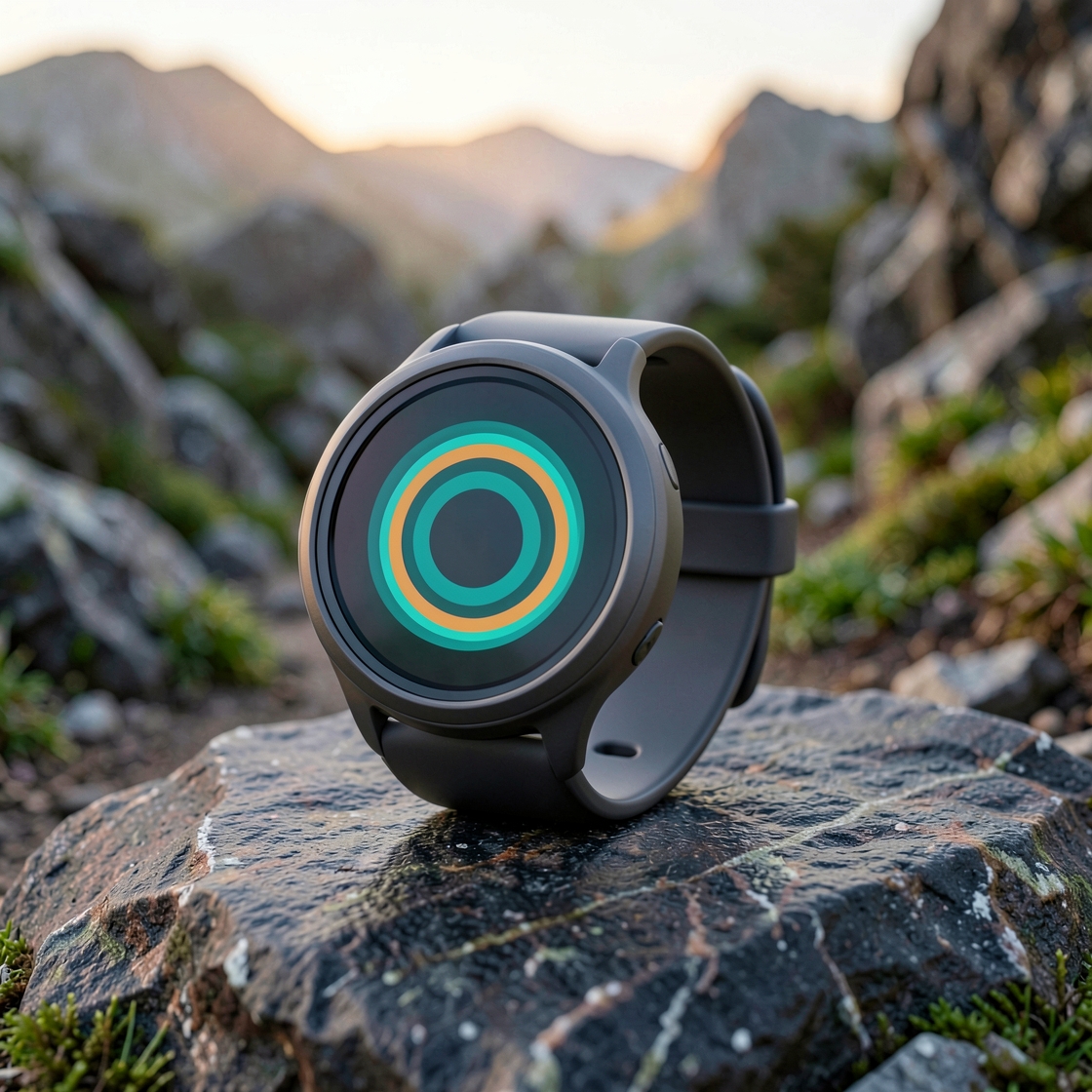
The Garmin fēnix 8 Pro has become a different purchase almost overnight. Garmin announced the fēnix 9 and fēnix 9 Pro on 25 August 2026, so a watch launched in September 2025 is no longer the current flagship. Its GPS, maps and inReach functions have not suddenly become worse, but the price and upgrade risk now matter more than they did at launch.
The short version is that the fēnix 8 Pro still makes sense for a narrow, demanding buyer: someone who will actually use phone-free LTE, satellite messaging or SOS and who finds it at a meaningful, verified saving over the new generation. If those connected functions are merely reassuring extras, the regular fēnix 8 or a lighter Forerunner is usually the more disciplined choice.
That conclusion also depends on the version. The 47 mm and 51 mm AMOLED models combine the best endurance with a familiar bright screen, while the 51 mm MicroLED edition prioritises daylight visibility at a severe battery and size cost. None of the fēnix 8 Pro variants offers solar charging, and none is small.
The fēnix 8 Pro now has a successor
Garmin's fēnix 9 announcement changes the context without rewriting the evidence. The company says the new Pro family adds a titanium case, AMOLED panels up to 3,000 nits, a larger 1.5-inch display on the 51 mm model, faster map rendering, more storage and solar options. Connected versions now span 43 mm, 47 mm and 51 mm, addressing one of the fēnix 8 Pro's clearest limitations.
Those are manufacturer claims, not independent findings. At the time of this update, this article has no comparable independent fēnix 9 Pro battery, comfort, GPS or connectivity tests to cite. The fēnix 8 Pro therefore has one important advantage: its behavior is documented across several long reviews. The successor has the stronger specification sheet; the outgoing model has the better evidence base.
A rugged watch that asks for a large wrist
The fēnix 8 Pro starts at 47 mm and rises to 51 mm. Reviewers consistently found it substantial: Tom's Guide called the 47 mm version large and thick, while The Guardian measured it as thicker and heavier than the standard fēnix 8. Sapphire glass, titanium hardware, 10 ATM water resistance and a 40-metre dive rating support the expedition positioning, but durability does not cancel the comfort tradeoff.
| fēnix 8 Pro variant | Display | Official smartwatch claim | Always-on claim | All-systems GPS claim | Practical tradeoff |
|---|---|---|---|---|---|
| 47 mm AMOLED | 1.4-inch AMOLED | Up to 15 days | Up to 8 days | Up to 26 hours | Smallest Pro, still thick and large |
| 51 mm AMOLED | 1.4-inch AMOLED | Up to 27 days | Up to 15 days | Up to 47 hours | Best claimed endurance, largest case |
| 51 mm MicroLED | 1.4-inch MicroLED | Up to 10 days | Up to 4 days | Up to 16 hours | Highest visibility, shortest endurance |
The table uses Garmin's published ceilings as compiled alongside Tom's Guide's variant specifications; it is not a promise of real-world runtime. The more useful design question is whether the watch can stay comfortable through sleep, recovery tracking and multi-day use. Buyers with smaller wrists should try the exact case before purchase rather than assume that a technically wearable 47 mm case will be comfortable around the clock.
What phone-free inReach actually changes
The Pro designation is chiefly about communication. With LTE coverage and an active inReach plan, the watch can handle calls, voice messages, text exchanges, LiveTrack and weather without a paired phone. The Guardian found messaging usable, calls acceptable for short conversations and LiveTrack especially valuable for letting a trusted contact follow a run or ride, although tracking sometimes lagged when LTE quality changed.
Satellite mode is not LTE everywhere. Garmin's manual limits the satellite path to text messages, check-ins and SOS; calls, voice messages, weather and LiveTrack require LTE on the fēnix 8 Pro. The user must orient the watch toward a geostationary satellite with a clear view of the sky. The Guardian reported messages commonly taking about 10 to 30 seconds in its test, but coverage, terrain and sky obstruction can change that experience.
An active subscription is essential, and service availability varies by region. That turns inReach into an ongoing safety-and-contact service rather than a feature purchased once with the hardware. It is potentially valuable for solo runners, cyclists and hikers who deliberately leave the phone behind, but it does not replace a dedicated satellite communicator for every expedition or guarantee rescue, coverage or delivery in every situation.
GPS, heart rate and maps under independent scrutiny
The strongest case for the fēnix 8 Pro is still Garmin's mature outdoor platform. Tom's Guide logged hundreds of running miles and reported exactly 26.2 miles on a measured marathon route. Its optical heart-rate readings generally tracked a chest strap, but the wrist sensor reacted more slowly to abrupt effort changes. That distinction matters for intervals, where an external sensor can offer a cleaner response than wrist optics.
Navigation is more than a breadcrumb trail. Full offline maps, routable courses, turn guidance and climb information allow useful decisions without a phone or data signal. The Guardian praised the global mapping and automatic return-to-route behavior, while Stuff considered the tracking and navigation package among the watch's central strengths. These observations support the product's outdoor credibility more convincingly than a long list of activity profiles would.
There is still a software cost. A deep feature set produces a learning curve, and Garmin's app ecosystem and general smartwatch functions remain less expansive than those of Apple or Google watches. Health, recovery and training metrics can inform planning, but they should not be treated as medical diagnosis or as a substitute for professional advice.
Battery life depends on the adventure
Official maximums hide very different workloads. Tom's Guide obtained roughly four to five days from the 47 mm AMOLED version with the always-on display and heavy daily running. The Guardian reported eight to nine days from the same case size with always-on display. Stuff, using the 51 mm AMOLED model with raise-to-wake and five to seven hours of training per week, charged about once every two weeks.
These results are not a clean disagreement because the case size, display mode and exercise load differ. They show the range a buyer should expect. Continuous multiband GPS, music, messaging and LTE LiveTrack consume far more energy than ordinary smartwatch use; Tom's Guide recorded about 11 hours with multiband GPS and LiveTrack active. A headline of “up to 27 days” is therefore useful only after matching it to a usage profile.
MicroLED demands the largest compromise. Its extraordinary visibility is attractive in hard sunlight, but the 51 mm edition's official smartwatch ceiling drops to 10 days and its all-systems GPS claim to 16 hours. For most buyers, AMOLED is the balanced fēnix 8 Pro. MicroLED is a specialised display choice, not an automatic upgrade.
fēnix 8 Pro versus fēnix 9 Pro, fēnix 8 and Forerunner 970
The regular fēnix 8 is the closest value alternative. Independent reviews say it retains the same fundamental training, sensor and mapping platform, comes in more sizes and avoids some of the Pro's thickness. Choose the 8 Pro only when built-in inReach changes how you train or travel; a phone carried on every outing makes much of the premium redundant.
The fēnix 9 Pro is the rational wait-and-compare option. Garmin says it brings connected models in all three case sizes, solar variants, a thinner titanium design, faster maps and additional satellite weather support. Those changes directly answer several fēnix 8 Pro compromises. They should still be treated as official specifications until independent reviews test comfort, endurance and communication in real conditions.
Forerunner 970 serves a different priority. In Tom's Guide's comparison with the standard fēnix 8, the Forerunner was lighter and slimmer while preserving similar running, training and navigation fundamentals. The fēnix family remains tougher, better suited to diving and longer-lived. A road runner who does not need phone-free inReach may gain more from lower wrist bulk than from expedition hardware.
Buy it now, wait or choose the non-Pro?
Use the following decision paths rather than treating the newest or brightest model as automatically best:
Buy the fēnix 8 Pro now if phone-free LTE and satellite messaging solve a real recurring need, the 47 mm or 51 mm case fits comfortably, and a current authorised seller offers a meaningful verified saving versus the fēnix 9 Pro.
Choose the standard fēnix 8 if you normally carry a phone, want the established mapping and training core, or need a smaller case or solar option.
Consider the Forerunner 970 if running performance, low mass and comfort matter more than dive hardware, maximum ruggedness or standalone inReach.
Wait for independent fēnix 9 Pro testing if a 43 mm connected model, solar charging, the newer map engine or the latest platform matters more than an immediate purchase.
The fēnix 8 Pro is not obsolete; it is newly price-sensitive. Its distinctive communications work, its navigation is proven and its battery can be excellent under the right settings. But after the fēnix 9 launch, buying it at a small discount would exchange newer hardware and a broader size choice for an evidence advantage that will shrink as successor reviews arrive.
The best purchase condition is therefore specific, not universal: the outgoing model should be materially cheaper, fit your wrist, and replace a phone or separate contact device often enough to justify the subscription. If any one of those conditions fails, waiting or stepping down is the stronger decision.
Buying options and alternatives
Affiliate disclosure: As an Amazon Associate I earn from qualifying purchases. Links in this section may earn TechKili a commission without changing the purchase price.
Garmin HRM-Pro Plus: Garmin's fēnix 8 manual lists HRM-Pro series sensors for external heart rate and running dynamics, making this a relevant training companion.

Evidence, sources and research method
This is a research-based review synthesised from published specifications and attributed independent testing; TechKili did not physically wear, use, measure or benchmark the Garmin fēnix 8 Pro. The article was reassessed on 27 August 2026 after the fēnix 9 announcement. Official successor claims are kept separate from independent fēnix 8 Pro observations, and dynamic prices are deliberately excluded.
Amazon research covered the exact watch, the Forerunner 970 alternative and a compatible training accessory. Only the Garmin HRM-Pro Plus listing could be verified directly and matched to Garmin's HRM-Pro-series compatibility documentation. No Amazon product image, rating, price, stock statement or recommendation module is reused.
Sources consulted:
Related Articles
USBSID-Pico connects vintage SID chips to USB, but the board revision matters
Hackaday's retrocomputing coverage highlights a bridge for real Commodore 64 sound chips. Voltage settings, controller choice and software support need a closer look.
Apple HomeView privacy depends on your paired device, too
A shared display's personal content requires face recognition and a recently unlocked paired device. Apple's Wi-Fi exception matters when setting household rules.
Harris HF-10 teardown shows how a clock tunes an analog filter
A newly identified 1985 chip links to the MF10 filter design. Its charge-transfer method explains clock-based tuning, while part identity alone cannot certify a replacement.
CMF Speaker S and M launch with USB-C audio and distinct stereo options
CMF's first speakers share wired audio and Auracast. Size, identical-model stereo pairing and conditional battery claims matter more than their removable panels.